Different autism genes converge on shared effects in human neural progenitor cells
A 2026 Nature study finds that disrupting each of 18 autism genes in cultured human cells shifts gene activity in similar ways, and proposes a protective role for the X-linked gene ZFX.
Autism is highly heritable, and mutations in hundreds of genes have been linked to it, each one individually rare. Those genes do very different jobs, which raises a puzzle: how can disrupting any of them lead to the same core features? A study published in Nature in 2026 by researchers at Boston Children's Hospital, the Broad Institute, the Children's Hospital of Philadelphia and Harvard University addresses that question in cultured cells. It also offers molecular insight into why females appear partly protected from autism, which is three to four times more common in males than in females.
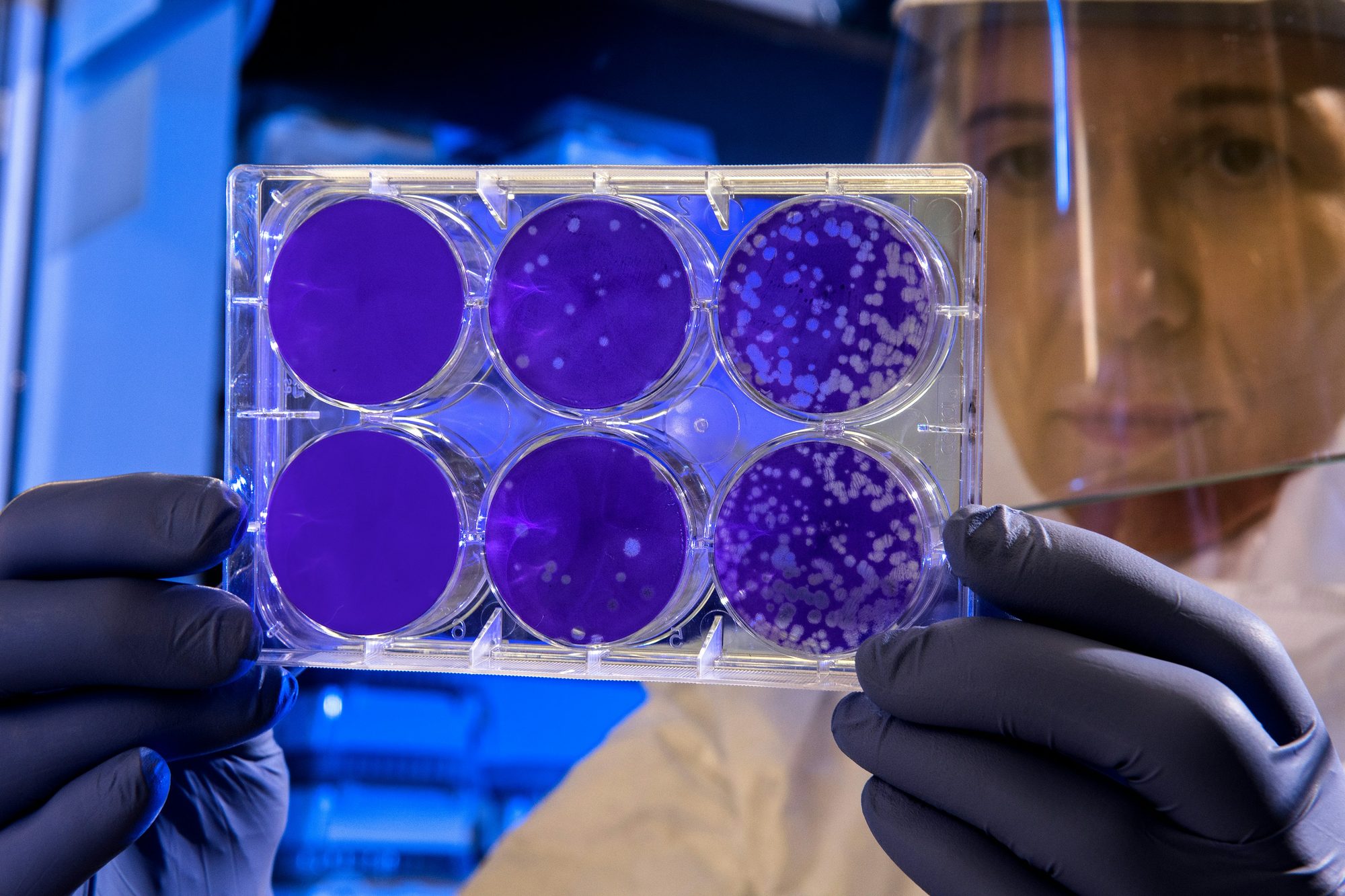
The team worked with human neural progenitor cells, the dividing cells that give rise to neurons, grown in the laboratory. They perturbed 18 autism-linked genes one at a time and measured the effect on gene expression, meaning which genes are switched on and how strongly. According to the authors, the separate perturbations converged on shared effects, including widespread lowering of the activity of other autism genes.
To find what drives that overlap, the researchers reconstructed a gene regulatory network, a wiring diagram of which genes control which, from scratch rather than borrowing an existing map. It pointed to central regulators, among them CHD8, a prominent autism gene, and candidates including REST.
The second strand concerns what geneticists call the female protective effect. Autistic females tend to carry more risk variants on the autosomes, the chromosomes other than X and Y, than autistic males, suggesting females need a heavier genetic load before autism appears. Its biological basis has been unknown. The study points to ZFX, a transcription factor (a protein that turns other genes on or off) on the X chromosome. Females carry two X chromosomes, one of them largely silenced, but ZFX is expressed from both. The study identifies ZFX as a key activator of many autism genes, and the authors propose that its higher level in the female brain could buffer damaging mutations across many different autism genes.
That final step is a proposal, not something shown in people. The experiments used progenitor cells in a dish, an early developmental stage rather than mature brain tissue, and covered 18 of the hundreds of implicated genes. The authors describe ZFX as contributing to the protective effect. braintankAI did not have access to the full paper, so this account rests on the abstract alone.
The work joins braintankAI's coverage of how genetic differences act through the machinery that switches genes on. Earlier stories traced inherited DNA variants to gene activity in particular immune cell types (earlier story) and to how open the genome is in single cells, a signal that helped an AI model map gene regulation (earlier story). Here the starting point is rare, damaging mutations rather than common inherited variation, but the underlying question is shared: how a change in one gene spreads through a regulatory network.
- Paper
- Transcriptomic convergence and the female protective effect in autism
- Authors
- Rebecca Andersen, Maya Talukdar, Tyler Sakamoto, David Exposito-Alonso, Janet H. T. Song, Xuyu Qian et al.
- Venue
- Nature · 4 November 2026
- Link
- doi:10.1038/s41586-026-11236-6
- Index
- stacks.braintank.ai
- Cite