CurvDelta: Low-Curvature Delta Modeling For Surgical Learning and Unlearning
A central challenge in adapting large language models (LLMs) is capability preservation: an adaptation can achieve its target while degrading general capabilities. We introduce CurvDelta, a scalable framework that incorporates the preservation constraint into the parameterization of the model update. By analyzing the local geometry of…
Mechanistic Critics for Sample-Efficient NPU Design-Space Exploration
NPU design-space exploration for LLM inference mainly relies on an expensive simulator that often returns only scalar feedback such as latency and power. Such feedback can rank evaluated configurations, but gives little information for deciding why a configuration is slow or which architecture parameter should be changed next. This…
PIPETTE: Prompt Injection Purple-Teaming for Robust LLM Agents
Large language model (LLM) agents routinely interact with untrusted external data, exposing them to indirect prompt injection (IPI) attacks that hijack agents into executing attacker-chosen tasks. To uncover these vulnerabilities at scale, automated red-teaming methods often leverage reinforcement learning (RL) to generate attacks that…
Jeveration: System One Models Now Generate
System One models such as Jev return decisions through fast, parallel prediction. In this paper, we introduce Jeveration, showing that the same decision paradigm can also generate high-quality images in a single forward pass. Jeveration builds on a frozen vision-language model, repurposing its visual-semantic knowledge for holistic image…
Language model teams as distributed systems
Elizabeth Mieczkowski, Katherine M. Collins et al. · Massachusetts Institute of Technology
Evidence for hidden altermagnetism in Cs 1 − δ V 2 Te 2 O
Guowei Yang, Ruihan Chen et al.
Four phases and temporal threshold of population calcium response during locomotion in cortical astrocytes
Anna Fedotova, Alexey Brazhe et al. · Jiaxing University
Host–microbe interactions in engineered immunocompetent human gut tissues
Rubén López-Sandoval, Marius F. Harter et al.
Union3.1: Reducing Systematics in Supernova Cosmology with Self-consistent Measurements of Host Galaxy Properties for 2000 Type Ia Supernovae
Taylor J. Hoyt, David Rubin et al. · Lawrence Berkeley National Laboratory
Deciphering the Physical Origin of GRB 240825A: A Long Gamma-Ray Burst Lacking a Bright Supernova
Rahul Gupta, Judith L. Racusin et al. · Brera Astronomical Observatory
TeleChat to Xing4: Advancing Frontier Agentic Models on Domestic Chips and Frameworks
We present Xing 4, a series of large language models that extends the TeleChat lineage through coordinated advances in model architecture and training infrastructure on Ascend. This report describes the design principles and systems engineering behind the series, spanning architecture selection, large-scale pretraining, and reasoning and…
Weight-Space Programming Doesn't Need Transformers
Standard neural architectures such as the Transformer were chosen because they train well with gradient descent and run fast on GPUs. In weight-space programming, a large language model (LLM) writes target weights by hand without gradient-based training, so those reasons no longer apply. Should we keep the Transformer? Given minimal…
The Resolution Hypothesis: Agent Evolution's Key Is Identifying Improvements
Agent evolution follows a simple loop: a proposer writes candidate artifacts (prompts, skills, memories) and selection accepts those that score higher. This loop has shown promise, yet practitioners face a puzzle: methods trade wins across papers, and evolution often fails to bootstrap on certain tasks. We trace this puzzle to the…
FastFrames: Video Generation at Interactive Latency
Autoregressive video diffusion models generate frames based on new observations and inputs, making them a promising medium for interactive visual experiences. However, existing models are orders of magnitude too slow for fluid interaction. This paper introduces FastFrames, a family of fast autoregressive video diffusion models that…
Recent Advances in Medical Imaging Segmentation: Generative, Few-Shot, Foundation and Universal Models
Fares Bougourzi, Abdenour Hadid · Sorbonne University Abu Dhabi
Competing paramagnetic phases in the maple-leaf Heisenberg antiferromagnet
Paul L. Ebert, Yasir Iqbal et al.
Integrated QTL mapping and CRISPR screening in pooled iPSC-derived microglia reveals genetic drivers of neurodegenerative risk
Marta Perez‐Alcantara, Sam J. Washer et al. · Open Targets
Posterior alpha/beta oscillations reflect oculomotor dynamics underlying subsequent memory effects
Xiongbo Wu, Tzvetan G. Popov et al. · LMU Klinikum
UNCOVER/MegaScience Finds Uniform and Highly Bursty Star Formation at 3 < z < 9, Consistent with the High-redshift UV Luminosity Function
Ikki Mitsuhashi, Katherine A. Suess et al. · Pennsylvania State University
Abstention Direction in Large Language Models: Mechanistic Interpretability of Abstention Across Query Ambiguity, Knowledge Limits, and Safety Alignment
Abstention, the withholding of a response by a large language model (LLM) under uncertainty or safety risks, is essential for trustworthy models. The causes of abstention fall into three perspectives: ambiguity in the Query (Q), limits of Model Knowledge (MK), and misalignment with Human Values (HV). However, prior analyses of internal…
InclusionMed: Benchmarking AI for Inclusive Healthcare
Advancing medical AI for inclusive healthcare requires evaluation across diverse healthcare roles, tasks, and care settings, but benchmark coverage remains uneven. We introduce InclusionMed, an open medical AI evaluation initiative for inclusive healthcare. The InclusionMed Atlas organizes benchmarks across three healthcare roles and…
Sage S2.1 Flash Technical Report
We introduce Sage S1.5 Flash, a 320-billion-parameter general-purpose mixture-of-experts model designed to reason over scientific evidence and act in interactive environments. Sage Sci-Perception uses dedicated encoders for molecular graphs and biological sequences and represents spectra as ordered patches of measurements.…
K2-Horizon: A Frontier Fleet of Open Source Language Models
We present K2-Horizon, a fleet of six fully open language models, from a 0.9B dense model to a 375B-A23B MoE, built for general-purpose reasoning and agentic work across math and science, software engineering, deep research, office automation, and beyond. The models lead or are competitive with strong open models of their size on agentic…
ForceHarness: Turning Force into Action and Physics for Frozen Frontier Models
Frontier multimodal models can now control robots zero-shot from images, yet many manipulation tasks depend on contact forces that images cannot show. Bringing force to an API-only frozen model raises two challenges. First, contact evolves much faster than an API model can decide, so the system must close the loop on force beneath the…
ScaleVLA: Scaling Vision-Language-Action Models to 552 Billion Parameters
Frontier Vision-Language Models (VLMs) such as GPT-6 Astra have demonstrated remarkable capabilities in robot control, suggesting that broad pretraining provides knowledge valuable for physical action. Yet most Vision-Language-Action (VLA) policies still rely on much smaller VLM backbones, leaving this potential largely untapped. We ask…
ALIVE: Making Streaming Video Models Interactive
Streaming video LLMs can continuously observe the world, yet often handle user requests in isolation. We introduce ALIVE, an interactive streaming video model supporting proactive monitoring, streaming task coordination, and feedback-seeking interaction. We construct ALIVE-SFT-288K and ALIVE-RL-3K for two-stage training. Contrastive…
Controlling the flow of information in optical metrology
Maximilian Weimar, Huan‐Li Zhou et al. · TU Wien
AllocFlow: End-to-End Portfolio Trading Action Generation from Raw Market Data
Real-world portfolio management requires converting noisy market observations into coordinated, simultaneous allocations across multiple assets under shared capital constraints. Advances in forecasting models and alpha discovery help identify opportunities. However, traditional pipelines often decouple signal forecasting from portfolio…
SWE-CoWork: Benchmarking Coding Agents as Digital Employees in Organizations
A coding agent working within a software organization must establish what to build, collaborate with colleagues, and verify what it delivers. We introduce SWE-CoWork, a benchmark comprising 101 development assignments across 101 real repositories, 11 programming languages, and 12 application domains. Each assignment places an agent in a…
Multi-Branch Transformer
Transformer language models are commonly scaled by making their blocks wider or stacking them deeper. In this work, we explore a complementary path: branching, the parallel composition of full Transformer blocks. We introduce the Multi-Branch Transformer (MBT), which processes the input through shared initial layers, executes…
The brain tumor sequence registration (BraTS-Reg) challenge for establishing correspondence between pre-operative and follow-up MRI scans of diffuse glioma patients
Bhakti Baheti, Satrajit Chakrabarty et al. · Emory University
Theoretical frameworks for credit assignment via behavioral timescale synaptic plasticity
Ian Cone, Claudia Clopath et al. · Imperial College London
Aligning AI Teams
Previous work has shown that alignment training on individual LLM agents can fail to transfer to multi-agent settings. We investigate the underlying mechanisms for this failure, and explore interventions to preserve alignment transfer to multi-agent LLM teams. We focus on two software-engineering tasks (sepsis triage, a news recommender)…
Gamer: A Generalist Vision-Language-Action Foundation Model for Long-Horizon Real-Time Game Agent
We introduce Gamer, a generalist agent framework built for long-horizon tasks in complex interactive environments. Its end-to-end architecture combines perception, memory management, and multi-step reasoning. A shared training and deployment pipeline supports interaction with both conventional 2D graphical interfaces and complex 3D…
Envisioning Agentic Robotics: A New Era of Robotic Systems
The release of GPT-6 Astra marks the emergence of a new paradigm in robotics: agentic robotics. Within weeks, frontier models with agentic harnesses matched or exceeded task-specific policies on many embodied benchmarks. Instead of training a dedicated policy for each family of tasks, an agentic robotic system applies a foundation model…
AscendGYM: A Cost-Aware Kernel Optimization Benchmark for Real-World Workloads on Ascend NPUs
Kernel optimization is essential for efficient large language model (LLM) training and inference on Ascend NPUs. Existing Ascend kernel benchmarks primarily focus on kernel generation, with less emphasis on the ability of agents to optimize existing implementations under input configurations drawn from real workloads. To address this…
MMFlash: Faster Speculative Decoding for Vision-Language Models
Speculative decoding accelerates generation by letting a lightweight drafter propose tokens for parallel verification by a target model. Diffusion drafters such as DFlash propose an entire token block in a single forward pass, but mainly focus on text-only tasks, leaving multimodal drafting underexplored. To study this setting, we first…
Self-Improvement Memory Enables Continual Recursive Self-Improvement
Harness optimization is often studied with a fixed policy model and benchmark. When either changes, the optimizer must decide which parts of an evolved harness to reuse or revise, but the harness alone may not explain why earlier edits were made or how they performed. In this work, we study Continual Recursive Self-Improvement (CRSI), a…
PaperCritic: Training AI Reviewers to Assess the Soundness of Papers
As AI conference submissions grow rapidly, AI reviewers are being considered as an alternative. However, simply imitating human reviewing is problematic because reviewing serves multiple purposes, including evaluating papers' soundness, interestingness, and clarity, the last two of which are subjective. In this work, we focus solely on…
(LRDs) 2 : The Low-ReDshift Little Red Dots Survey. II. DESI DR1 Sample
Xiaojing Lin, Xiaohui Fan et al. · Center for Astrophysics Harvard & Smithsonian
PhysLoop: Harnessing LLMs' Physics Awareness for Self-Improving Video Generation Models
Video generation models produce visually realistic videos but still struggle with physical dynamics and causal consistency. Learning from generated videos requires fine-grained physical supervision, yet reliable quality judgments, correction pairs, and controlled variations are difficult to obtain. Large language models (LLMs) possess…
Actor, Judge, or Teacher? Understanding Decision Models in Long-Horizon Agents
Decision models answer a question with a typed output, such as a choice among options with a probability for each, so one model can choose an agent's actions, evaluate actions already taken, or score every action to teach a policy with reinforcement learning. Prior work has studied them mainly as actors, judging their usefulness by how…
Ropedia Xperience 2: A Gold Standard for Scaling Physical AI Environments and Behaviors
Large foundation models such as GPT-6 Astra and Claude Fable 5.1 have recently been shown to control robots directly from visual observations. They nevertheless remain brittle on long-horizon, contact-rich tasks in real-world environments. Further progress depends on two complementary resources: demonstrations of human behavior that…
Toward chemically accurate quantum simulations on quantum hardware: A quantum-HPC hybrid approach
Anurag K. S. V., Ashish Patra et al. · Ahmedabad University
Scaling medical imaging report generation with multimodal reinforcement learning
Qianchu Liu, Sheng Zhang et al. · Microsoft (United States)
Quantitative measurement of viscosity in two-dimensional electron fluids
Yihang Zeng, Haoyu Guo et al. · Columbia University
VibePrevisBench: Evaluating Agentic Coding for 4D Scene Generation in Blender
Controllable real-world video generation models can condition on a rendered graybox proxy video, which fixes layout, motion and camera. Coding agents can build such videos by reconstructing a 4D scene in Blender, yet no benchmark checks both these videos and the long, multi-shot scenes behind them. We introduce VibePrevisBench, a…
SO-Arena: Benchmarking the Capability Spectrum and Reliability of System One Models
System One models promise fast, general-purpose decision-making without lengthy token generation. However, understanding their capability spectrum and decision reliability requires more than aggregate performance on current benchmarks. Existing evaluations often provide limited insight into the breadth of model capabilities and the…
Duo: A Reciprocal World Model for Full-Duplex Interaction
In this report, we introduce the Reciprocal World Model (RWM) and present Duo v1, a full-duplex world model that continuously perceives audiovisual inputs while responding to users in real time. The RWM treats intelligence and physical reality as equally fundamental to what constitutes a world. Existing world models largely focus on…
Open Vision Banana: A Fully Open Recipe for Generative Visual Perception
Recent work suggests that pretrained image generators encode real-world understanding beyond image synthesis. Vision Banana exploits this by framing vision tasks as conditional image editing. However, its data, weights, code, and implementation details are not public. We present Open Vision Banana (OVB), a fully open and reproducible…
Breath-Dx: A Time Series Classification Benchmark for Disease Screening with eNose
Electronic nose (eNose) technology offers a portable, non-invasive route for disease screening via exhaled breath analysis. However, progress in the field is hindered by the lack of systematic benchmarks that compare machine learning methods under realistic conditions, particularly sensor drift, a known but rarely quantified failure…
Non-halogen aqueous electrolytes for four-electron iodine conversion

Ruwei Chen, Haobo Dong et al. · University College London
Experience modifies the synaptome architecture in the developing and adult mouse brain
Hanan Woods, Ülkü Günar et al. · Simons Initiative for the Developing Brain
Glycosylation and importins liquefy the FG barrier in live nuclear pores
Miao Yu, Maziar Heidari et al. · Johannes Gutenberg University Mainz
LEASH: Stay Safe in Agentic Robotics
Foundation models such as GPT and Claude have shown strong capabilities in spatial understanding and embodied intelligence. These advances make agentic robotics a promising path toward artificial general intelligence in robotics. However, we find that using foundation models to control robots poses serious safety risks, and comprehensive…
Don't Just Trust Your Memory: Evidence-Linked Memory Reduces Memory-Induced Degradation in LLM Agents
External memory enables LLM agents to improve from experience by distilling trajectories of past tasks into concise lessons for new tasks. However, memory can also lead to memory-induced degradation, where an agent fails on tasks it would solve without memory, often because it follows a lesson that is incorrect, or misapplies or misreads…
BirdDreams: Joint Perspective and BEV Video Generation for a Plausible, Reactive Driving World Model
Driving world models aim to simulate how a scene unfolds under different ego actions. This requires plausible motion of surrounding vehicles as well as precise ego-trajectory control. Learning vehicle motion from perspective video alone is challenging because motion is entangled with appearance and vehicles can be occluded. Prior work…
Few-Step Streaming Video Generation via Condition Shifting
Few-step sampling reduces the cost of streaming video generation. Distribution Matching Distillation (DMD) supervises few-step generators with a separate fake-score network, which adds training memory and computation and must track the evolving generator. We extend APEX to streaming video by using condition shifting to estimate the…
SteerDistill: Quantizing LLM Agents via Closed-Loop Teacher Steering
Low-bit quantization reduces the inference cost of LLM agents but can compromise task success. Examining failed rollouts, we find that quantized agents overlook task requirements or environmental conditions, producing environment transitions that diverge from successful full-precision references. Correcting these behavioral divergences…
Tree-Ising: Repairing Language Models with Bit-Level Ising Edits
Weight-space programming, introduced in recent MIT work by Takehi et al., enables a frontier LLM agent to read a network's weights and write a repair. Their GPT-6 Astra agent corrected the reasoning loops of Qwen3.5-0.8B without gradients, using 158 agent turns, 89.7 million tokens, and 50 forward-pass requests. Our method, Tree-Ising…
MMDM: Measuring Massive Multitask Decision Making
System-1 Decision Models directly make structured probabilistic decisions over query-specified options given a state in a single forward pass, without autoregressively generating reasoning trajectories or textual responses. Recent evaluations cover diverse tasks but often rely on existing benchmarks, where prior exposure to test material…
Quantum approximate optimization algorithm with cat qubits
Pontus Vikstål, Laura García-Álvarez et al. · Chalmers University of Technology
Autoadaptive medical segment anything model
Tyler B. Ward, Meredith K. Owen et al. · University of Kentucky
The representational geometry of cognitive maps under cognitive control
Seongmin A. Park, Maryam Zolfaghar et al. · Brown University
Banana Split: Improved Cosmological Constraints with Two Light-curve-shape and Color Populations Using Union3.1+UNITY1.8
David Rubin, Taylor J. Hoyt et al. · University of California, Berkeley
Learning Heterogeneous Tactile Representation for General Dexterous Manipulation
Tactile sensing is an indispensable modality for contact-rich dexterous manipulation, a capability that hints at the ultimate frontiers of embodied intelligence. However, commercially available tactile sensors are still at a relatively early stage of development, with each type of sensor offering irreplaceable strengths alongside its own…
Sage-Taiyi: A Metacognitive Architecture for Scientific Discovery

We introduce Sage-Taiyi, a metacognition-inspired architecture that uses accumulated scientific understanding to guide what to investigate next and how to investigate it. Through explicit monitoring and control, the system revises its understanding of evidence, assumptions, and unresolved questions, then uses these assessments to adapt…
Infrathon: Benchmarking Language Agents for Real-World, Long-Horizon AI Infra Optimization
In this work, we study whether frontier agent can continually improve real-world AI infrastructure over long horizons. We introduce Infrathon, a benchmark of diverse, long-horizon AI infrastructure optimization tasks across different levels. We evaluate six models across 150 runs with 24-hour budgets, totaling over 10,000 GPU-hours. Our…
World In-Context Learning for Agentic Robot Manipulation
Trained action policies write manipulation skill into network weights, tying what is learned to the distribution it is learned from. In-context learning (ICL) avoids this coupling but has not matched trained policies, because a demonstration recorded in another scene carries no feedback from the world the robot currently faces. We…
MIRIX-2.0: Multi-Agent Memory System
Long-term memory lets LLM agents personalize, stay consistent, and reuse what worked before. Parametric memories need training, consolidation can lose details for good, and keeping every record leaves a growing store to search. We present MIRIX-2.0, a multi-agent memory system designed to be practical, accurate, and efficient at once. It…
Reframe: Observation-Aligned Multi-Teacher On-Policy Distillation for Agentic Visual Reasoning
Agentic reinforcement learning (RL) and multi-teacher on-policy distillation (MOPD) offer complementary routes to post-training. For visual agents, however, tool use presents two related challenges. Models may overlook useful tool-returned observations, while poorly grounded actions can limit the evidence available for subsequent…
dNaViT: Discrete Codes are General-Purpose Visual Representations
Discrete autoregressive modeling, notably through next-token prediction, has become a cornerstone of modern language models. Extending this paradigm to vision allows visual and language models to converge on a unified framework, thereby fostering shared methodology and infrastructure. This work investigates a central question: how far…
Embodied First Exam
Early successes on agentic robotics point to a potential paradigm shift toward using coding agents to control robots. Existing robotics benchmarks are built around visuomotor policy learning, leaving it open whether coding agents can reliably control diverse robots under physical-world constraints. We therefore introduce the Embodied…
Generating interesting scientific ideas using knowledge graphs and LLMs: Evaluations with 100 research group leaders
Xuemei Gu, Mario Krenn · Friedrich Schiller University Jena
G-STAR: Group-Scaled Token Capacity for Deeply Compressed Autoregressive Generation
Discrete autoregressive models offer a scalable framework for image generation. However, they face a fundamental trade-off: long token sequences preserve representation quality but slow generation, while aggressive spatial compression reduces representation capacity. Based on product quantization, we show that, under a fixed nominal…
One Table, Many Queries: Benchmarking Generalist Tabular Models Across Generation, Imputation, and Prediction
Generation, imputation, and prediction query different aspects of the same tabular distribution, but are usually evaluated separately. This leaves unclear which capabilities they share, how their training objectives interact, and whether one model can perform all three well. We introduce the One Table Benchmark (), spanning 56 datasets…
WorldFoundry: Towards Unified Infrastructure for World Intelligence
Visual generative models increasingly blur the line between synthesizing observations and simulating environments. Yet visual plausibility alone does not constitute successful world modeling: compelling outputs may lack persistent state, physical dynamics, or causally consistent responses to interactions. We define a generative world…
MACaQ: Fast, Model Agnostic Calibrated Quantization for Low-Precision Weights and Activations
Weight-activation quantization can reduce the memory and compute cost of neural-network inference, but recent methods often require expensive optimization and architecture-specific propagation of basis transforms across layers. We introduce MACaQ, an MXFP4 W4A4 post-training quantization method that treats every linear layer…
Glyph: An Interpretability Engine for AI-Driven Scientific Discovery in Clinical Data
Automated scientific discovery has the potential to advance understanding of disease mechanisms and accelerate identification of early disease markers. Manual data annotation is infeasible at population scale, motivating methods that automatically extract pre-defined phenotypes in multimodal and unstructured clinical data. Such…
Toward the Era of Agentic Embodied Intelligence
Foundation models increasingly guide robot actions, yet sustained autonomy requires efficient control and failure recovery. We introduce A2-MEAS, an embodied multi-agent framework built around code as a scaling interface. Learned correction codes combine corrective language, spatial evidence, execution history, and action proposals.…
Frontier3DBench: Benchmarking Coding Agents for 3D Creation across Objects, Scenes, and Interactive Open Worlds
Coding agents combine visual understanding with program execution, offering a new route to automated 3D creation. By translating images and instructions into editable programs, they bring reconstruction, generation, and editing into a shared workflow. Yet existing benchmarks fragment evaluation across task scopes and protocols, leaving…
Evaluating FoundationPose object registration accuracy for AR-guided industrial inspection
Christian Masuhr, Julian Koch et al. · Hamburg University of Technology
Eight New Ultramassive Black Hole Masses Confirm Best Correlation with Galaxy Core Sizes
Stefano de Nicola, Jens Thomas et al. · Max Planck Institute for Extraterrestrial Physics
SplatAnything: Gaussian Spacing Normalization for Feed-forward 3DGS across Arbitrary Scenes
We identify a key limitation of existing feed-forward 3DGS methods: Gaussian attributes are typically predicted in a radial-distance-normalized space that canonicalizes a global radial statistic of the reconstructed geometry, while the spacing between neighboring Gaussian centers can still vary substantially across scene scales and…
PCBRouteAgent: How Close Are LLM Agents to Becoming PCB Routing Engineers?
Automating printed circuit board (PCB) routing requires coordinating board-level connectivity decisions with geometric execution under strict design rules. Although recent agents can interact with native routing tools, reliable routing on complex boards remains challenging. We present PCBRouteAgent, a multimodal PCB routing agent…
ReproBridge: Building Reproducibility into ML Research Artifacts
Reproducing machine learning experiments requires reconstructing procedures from information scattered across papers, released code, and supporting artifacts. For coding agents, reproduction success can therefore depend on their ability to fill in missing details, rather than on the released artifacts alone. We ask whether preserving…
Equivalence of pseudogap and pairing energy in a cuprate high-temperature superconductor
Jiasen Niu, Maialen Ortego Larrazabal et al. · Delft University of Technology
Majorana edge reconstruction and the ν = 5/2 non-Abelian thermal Hall puzzle
Tevž Lotrič, Taige Wang et al. · Harvard University
SPILLWAY: Separating Target Admission from Sanitization to Defend Tool-Using Agents against Prompt Injection
Tool-using agents act on email, files, and payments, so an instruction hidden in a web page or a shared document can make an agent send data or money to an attacker. Many runtime defenses put a language model on the decision that lets an action through, so the decision depends on a model that may read the attacker's text and adds model…
Confucius4-R2T2: A Stable-Prefix Streaming ASR Model for Real Real-Time Transcription
Streaming speech recognition is increasingly consumed by machines, such as translators and voice agents, that act on each token as it appears. A token that is later revised costs wasted work or a wrong action. In this work, we present Confucius4-R2T2 (short for Real Real-Time Transcription), a stable-prefix streaming ASR model that never…
LLMs Don't Know What They Know: Benchmarking Temporal Self-Knowledge for Financial Backtesting
Financial backtests of large language models (LLMs) are meaningful only if the model did not already know the outcomes it is asked to predict. Practitioners guard against this by trusting a vendor's stated knowledge cutoff, by asking the model what it knows, or by instructing it to answer as of a past date. To verify whether any of these…
LongBanana: An Expert-Verified Benchmark for Long-Context Multi-Reference Image Synthesis
We introduce LongBanana, to our knowledge the first expert-designed and expert-verified benchmark for long-context multi-reference image synthesis in the age of agent-driven image generation. The task requires retrieving dispersed visual evidence, rejecting distractors, binding entities and relations, and composing one coherent final…
On the Design of Hyper-Connections: Simplification, Stability, and Scalability
Hyper-Connections (HC) architectures are increasingly adopted in frontier language models, yet their components remain insufficiently understood and introduce non-negligible training overhead. In this work, we systematically study the HC architecture to understand its components and identify simpler, more efficient designs. We find that…
Intrinsically motivated humans and agents in open-world exploration
Aly Lidayan, Yuqing Du et al. · University of California, Berkeley
Benchmarking latent-space reasoning abilities in large language models through forced response-language selection
Thilo Hagendorff, Sarah Fabi · University of Stuttgart
Aggression experience and observation drive shared behavioural and neural changes

Jorge Iravedra, Eartha Mae Guthman et al. · Columbia University
Transcriptomic convergence and the female protective effect in autism

Rebecca Andersen, Maya Talukdar et al. · Boston Children's Hospital
Ecological and social cues orchestrate concerted courtship in Drosophila
Philipp Brand, Katherine Keller et al. · Boston University
An open structure-guided RNA foundation model for generalizable prediction
Heqin Zhu, Ruifeng Li et al. · Suzhou Research Institute
A spatiotemporal cancer cell trajectory underlies glioblastoma heterogeneity
Grant de Jong, Fani Memi et al. · Cambridge University Hospitals NHS Foundation Trust
Tracing the spread of Celtic languages using ancient genomics
Hugh McColl, Guus Kroonen et al. · Aberystwyth University
Exorcising ghosts with gravitational waves

Gaetano Lambiase, Shinji Mukohyama et al.
OneTrans-GSR: A Generative Slate Ranking Paradigm Unifying Reranking and Mix-Ranking with One Autoregressive Transformer
Industrial recommender systems allocate substantial computation to pointwise candidate scoring, yet separate reranking and mix-ranking stages still assemble the final exposure slate using hand-crafted rules and specialized low-capacity models. Mix-ranking combines product cards, short videos, livestreams, and advertising cards supplied…
RAD-2: Scaling Reinforcement Learning in a Generator-Discriminator Framework
Hao Gao, Shaoyu Chen et al. · Horizon Robotics (China)
Helios: Real Real-Time Long Video Generation Model
Shenghai Yuan, Yuanyang Yin et al. · ByteDance (China)
P^2-MOPD: Accelerating Multi-Teacher On-Policy Distillation via Parameter Priors
Multi-teacher on-policy distillation consolidates expert capabilities by supervising student-generated trajectories, whereas task arithmetic offers a training-free alternative through linear parameter combinations. We view the linear combination of student and expert parameters as a single differentiable model and propose P^2-MOPD, which…
No-go theorems for sublinear-depth group designs
Maxwell West, Diego García-Martín et al. · Los Alamos National Laboratory
Transcranial magnetic stimulation to the dorsolateral prefrontal cortex modulates single-neuron activity in humans
Charles W. Dickey, Umair Hassan et al. · Stanford Medicine
Anterior cingulate neurons perform parallel processing of fixated and peripheral information to guide information sampling and choice
James L. Butler, Timothy Müller et al. · John Radcliffe Hospital
Detecting Tidal Resonances in Binary Neutron Stars
Fabian Gittins, Harsh Narola et al. · National Institute for Subatomic Physics
Spatially Resolved Physical Properties of Young Star Clusters and Star-forming Clumps in the Brightest z > 6 Galaxy, the Strongly Lensed Cosmic Spear at z = 6.2
Abdurrouf, Dan Coe et al. · Association of Universities for Research in Astronomy
First Measurement of the Hubble Constant from Gravitational Wave–Galaxy Cross Correlations
Isabela Santiago de Matos, Charles Dalang et al. · Centro Brasileiro de Pesquisas Físicas
Morphoelectric diversity and specialization of primate striatal neuron types
Xiao-Ping Liu, Rachel A. Dalley et al. · Allen Institute
Cross-species multiomic atlas of the primate basal ganglia
Nelson Johansen, Yuanyuan Fu et al. · Allen Institute
Spatial transcriptomics reveals molecular organization of human and nonhuman primate basal ganglia
Madeleine N. Hewitt, Meghan A. Turner et al. · Allen Institute
Multimodal single-cell epigenomic and 3D genome atlas of the human basal ganglia
Wubin Ding, Amit Klein et al. · Salk Institute for Biological Studies
Single-cell analysis of chromatin state and transcriptome in the human basal ganglia
Lei Chang, Kai Li et al. · New York Genome Center
Flide: Accelerating Decision Inference with Exact State Forking
Decision models such as Jev have emerged as a highly promising paradigm for LLM agent systems, providing lightweight and reliable categorical reasoning for rapid System One execution. However, existing generation-oriented inference engines fail to support these workloads effectively, suffering from severe prefix recomputation overheads…
Scaling Mathematical Proof Supervision from Structured Textbooks
Mathematical supervision for language models is typically flattened into isolated problem-solution pairs, discarding the curricular organization and evidential structure of the original sources. We introduce TOME-Math (Textbook-Oriented Mathematical Evidence), a large-scale corpus that converts 2,118 textbooks spanning the core areas of…
Incentivizing Self-Learning in Large Language Models via Reinforcement Learning
Large language models (LLMs) draw on parametric knowledge and retrieval-augmented generation (RAG) to solve knowledge-intensive tasks. Yet problem solving in unfamiliar domains calls for tightly coupled knowledge acquisition and reasoning, beyond factual retrieval and aggregation or learning solely from a preassembled context. We study…
Making Binary Classification From Multiple Unlabeled Datasets Almost Free of Supervision
Yuhao Wu, Xiaobo Xia et al. · Hong Kong Baptist University
A clinical multimodal vision language foundation model with fine-grain explainability
Yang Bai, Haoran Cheng et al. · Agency for Science, Technology and Research
Altermagnetism revealed by polarized neutrons in MnF 2
Quentin Faure, Dalila Bounoua et al. · CEA Paris-Saclay
Chiral altermagnon in MnTe
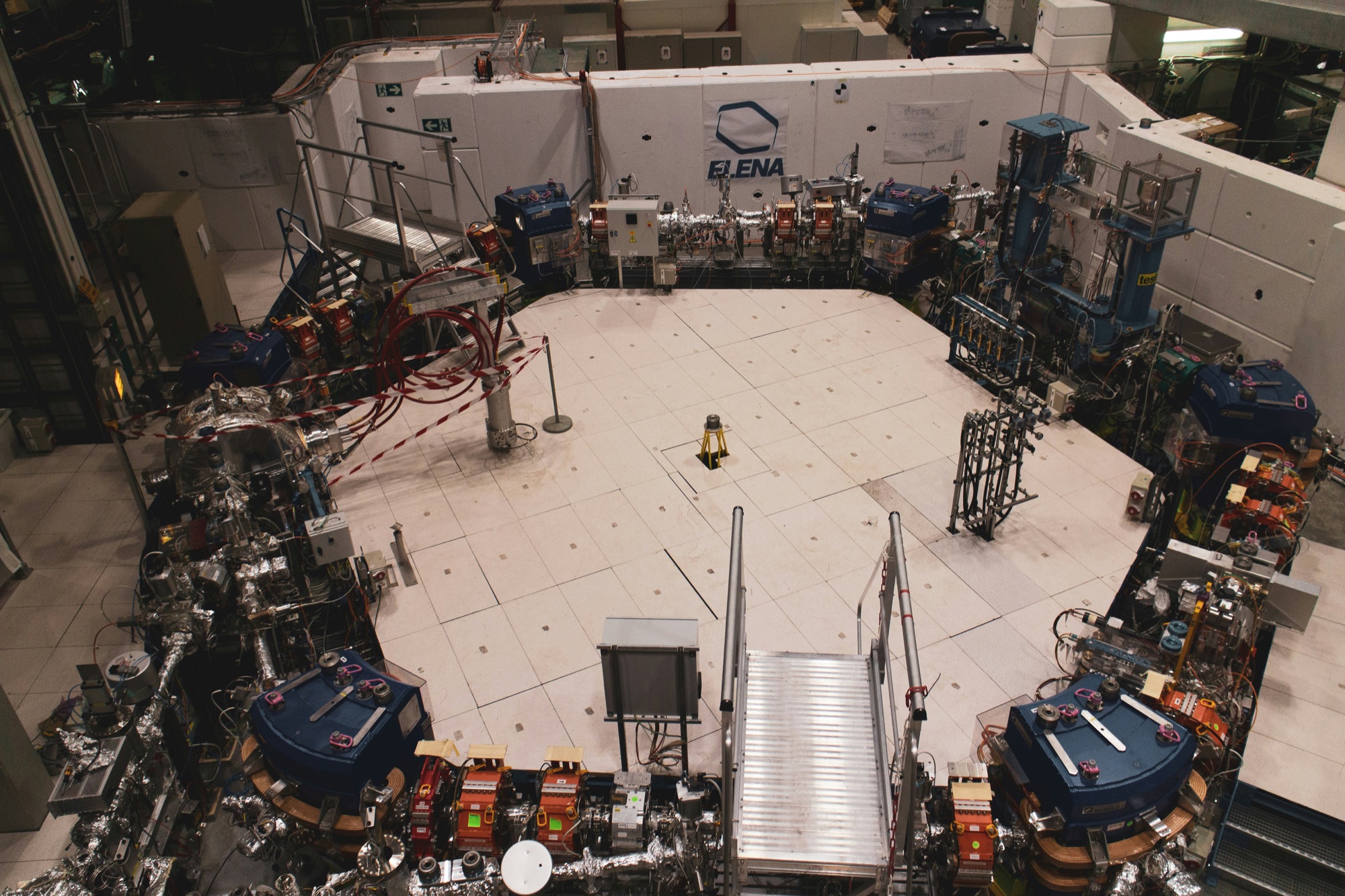
Daniel Jost, Resham Babu Regmi et al. · Bavarian Academy of Sciences and Humanities
Emergence of Chern metal in a moiré Kondo lattice
Wenjin Zhao, Zui Tao et al. · Cornell University
Whole-body single-cell atlas of an adult vertebrate, Danionella cerebrum
Kutay Deniz Atabay, Patrick Aoude et al. · Charité – Universitätsmedizin Berlin
CADS: a comprehensive anatomical dataset and segmentation for whole-body anatomy in computed tomography
Murong Xu, Fernando Navarro et al.
Efficient identification of linear, parameter-varying, and nonlinear systems with noise models
Alberto Bemporad, Roland Tóth · Eindhoven University of Technology
Defining and measuring proximity to criticality based on univariate time series
J. Samuel Sooter, Antonio J. Fontenele et al. · Southern Methodist University
Emotion regulation capacity lacks a shared neural signature
Maurizio Sicorello, Jenny Zähringer et al. · Central Institute of Mental Health
Alzheimer’s disease genetics converges on microglial and neuronal dysregulation
Emil Uffelmann, Douglas P. Wightman et al. · Amsterdam Neuroscience
Rare and common genetic variants shape single-cell immune gene expression
Anna S. E. Cuomo, Eleanor Spenceley et al. · Garvan Institute of Medical Research
Tracing the spread of Germanic languages using ancient genomics
Hugh McColl, Guus Kroonen et al. · Leiden University
MCT1-dependent mitochondrial lactate import sustains cardiac metabolism

Ahmad A. Cluntun, Joseph R. Visker et al. · Rutgers, The State University of New Jersey
Genetic variants shape single-cell chromatin accessibility and disease risk
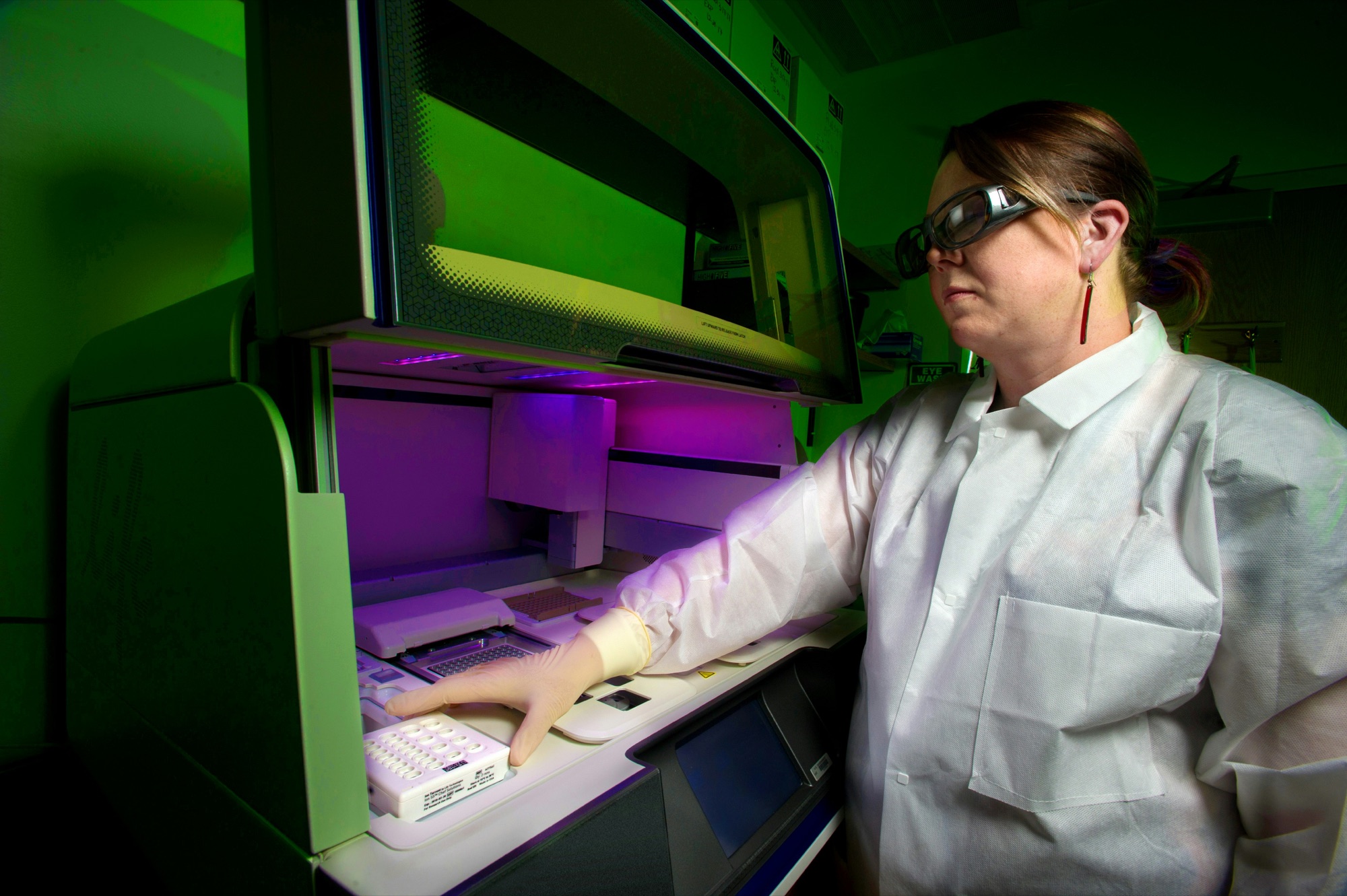
Angli Xue, Jianan Fan et al. · Garvan Institute of Medical Research
Perinatal elimination of genetically aberrant human cortical neurons
Diane D. Shao, Yifan Zhao et al. · Boston Children's Hospital
ALESS–JWST: Dust-driven Morphologies and Hidden Stellar Mass in z ∼ 3 Submillimeter Galaxies
J. C. Li, Elisabete da Cunha et al. · Australian National University
PaECTER: Patent-level representation learning using citation-informed transformers
Mainak Ghosh, Michael E. Rose et al. · Centre for Economic Policy Research
Transparent sociodemographic inference on reddit from self-declarations
Federico Cinus, Corrado Monti et al. · Intesa Sanpaolo (Italy)
A model predictive control framework with robust stability guarantees under unbounded disturbances
Johannes Köhler, Melanie N. Zeilinger · ETH Zurich
Manifold meta-learning for reduced-complexity neural system identification
Marco Forgione, Ankush Chakrabarty et al. · Dalle Molle Institute for Artificial Intelligence Research
Modeling direct waves in binary black hole ringdowns
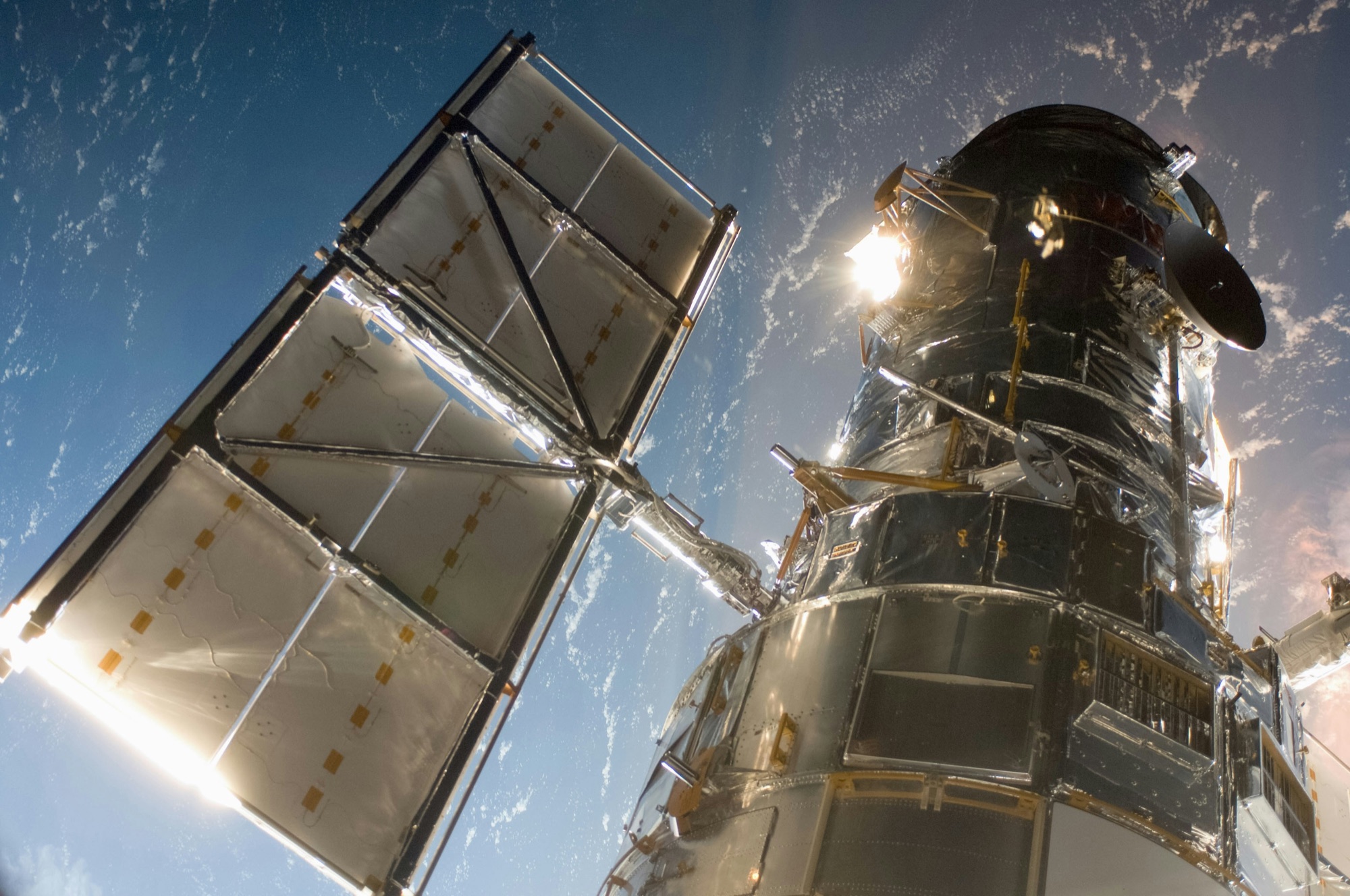
Richard Dyer, Adrian Ka-Wai Chung et al.
Black Hole Supernovae Outcomes Across a Wide Progenitor Range
Oliver Eggenberger Andersen, Evan O'Connor et al. · Michigan State University
Comparative analysis of end-to-end learning and foundation models for clinical-grade prostate pathology
Nita Mulliqi, Anders Blilie et al. · Karolinska Institutet
Less Is More: Efficient Black-box Attribution via Minimal Interpretable Subset Selection
Ruoyu Chen, Siyuan Liang et al. · Chinese Academy of Sciences
A Cosmological Framework for Stellar Collisions at High Redshift in Proto-globular Clusters, Nuclear Star Clusters, and Little Red Dots
Claire E. Williams, Smadar Naoz et al. · Flatiron Institute
Emergence of diffusion models from associative memory through memorization and generalization
Bao Pham, Gabriel Raya et al. · CY Cergy Paris Université
High-resolution measurements of thermal conductivity matrix and search for thermal Hall effect in La 2 CuO 4
Jiayi Hu, Haozhi Xu et al. · Brookhaven National Laboratory
Equation of state for the edge flow of chiral colloidal fluids
Jessica Metzger, Cory Hargus et al.
Neural subspaces encode sequential working memory without detectable neural sequences
Aniol Santo-Angles, Jiarui Yang et al. · HiLIFE – Elämäntieteiden Instituutti
Enhancing bosonic qubit protection by squeezing
R. Rousseau, Diego Ruiz et al. · Alice & Bob (France)
Thermodynamic origin of the phonon Hall effect in a honeycomb antiferromagnet
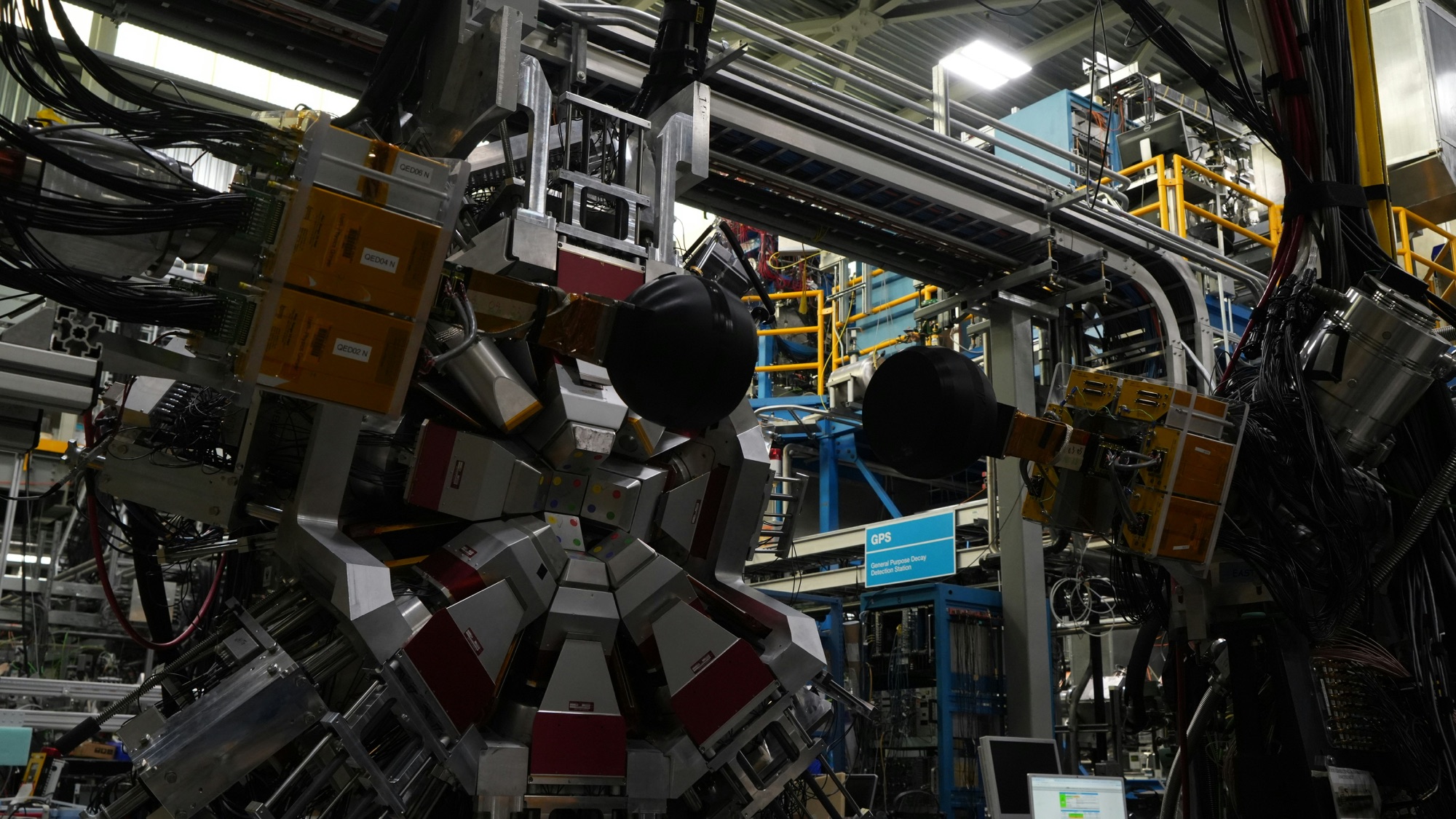
Qingkai Meng, Xiaokang Li et al. · Henan Academy of Sciences
Electronic bound states in the continuum in a two-dimensional metal
Morgan Thinel, Xiong Huang et al. · Brookhaven National Laboratory
Quantum geometric ferromagnetism by singular saddle point
Taisei Kitamura, Hiroki Nakai et al.
Accuracy and fairness of facial recognition technology in real-world, low-quality police images: An experiment
Maria Cuellar, Hon Kiu To et al. · University of Pennsylvania
Atlas-assisted segment anything model for fetal brain MRI (FeTal-SAM)
Qi Zeng, Weide Liu et al. · Boston Children's Hospital
Predicting upcoming visual features during eye movements yields scene representations aligned with human visual cortex
Sushrut Thorat, Adrien Doerig et al. · Bernstein Center for Computational Neuroscience Berlin
JWST Absorption-line Analysis of UV-bright Galaxies at z = 7.2–10.6: Early Chemical Enrichment Traced by C, O, Mg, Al, Si, and Fe
Minami Nakane, Masami Ouchi · National Astronomical Observatory of Japan